
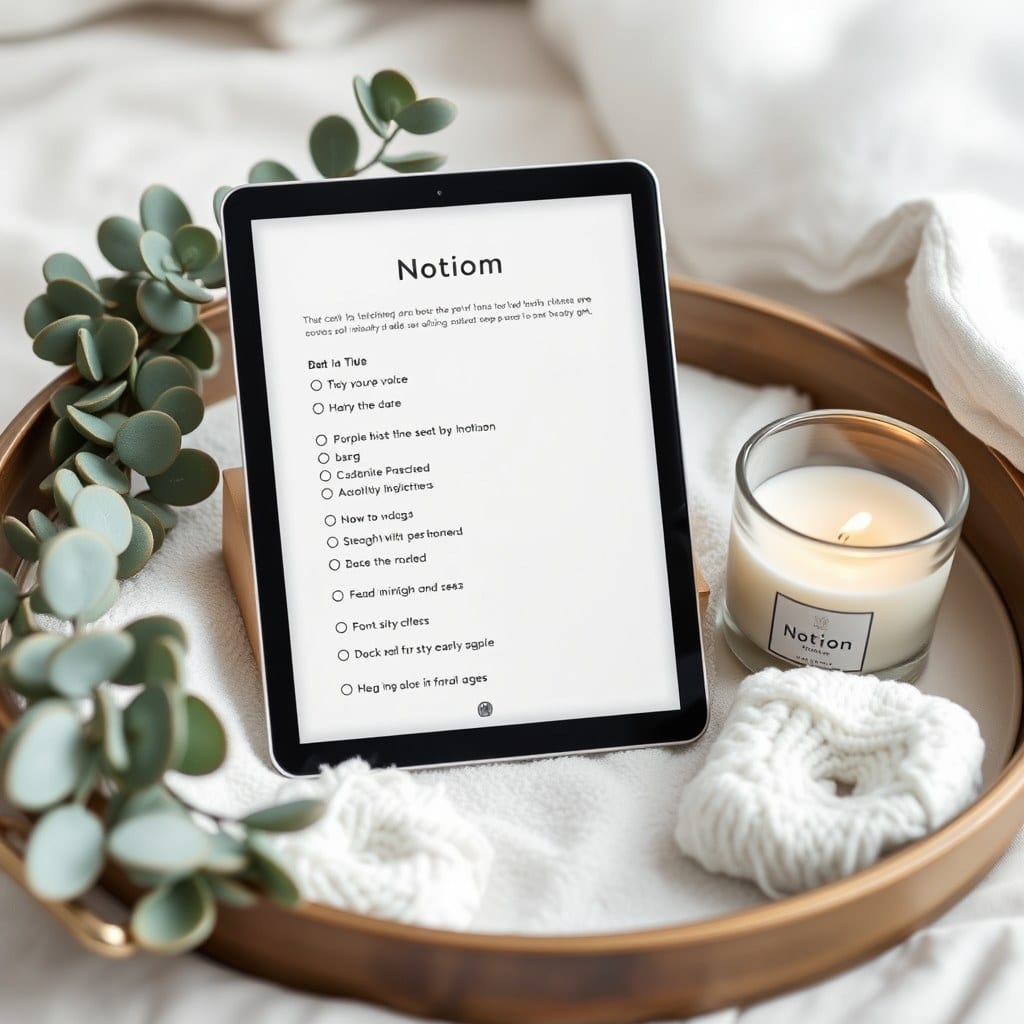
Every January, my inbox fills with the same message: I bought a journal, I made a beautiful Notion page, and by February it was a graveyard of half-finished entries. The person writing almost always blames themselves. They assume they lack discipline, or that they’re “not a journaling person.”
I don’t think that’s what’s happening. I think most journaling systems are designed for an imaginary version of you — one who wakes at 6am, has no children, no commute, no anxiety, and an unlimited appetite for reflection. When that version doesn’t show up, the system collapses. And because the system looked so pretty, the collapse feels personal.
So let’s look at what actually goes wrong, and what tends to work instead.
## The problem with daily pages
Daily journaling is the most recommended and least sustainable format I know. It works for a small number of people who genuinely enjoy writing longhand every morning. For everyone else, it creates a debt. Miss three days and now you owe three entries. Miss a week and the debt is so large that opening the page feels like opening a bill.
The fix isn’t to try harder. It’s to change the unit of time. Instead of “write every day,” try “write when something is worth keeping.” That could be three times a week or three times a month. The page doesn’t care. It only records what you bring to it.
I built the Year in Pages template around this idea. There’s a daily section, but it’s optional and tiny — a single line, a mood, a weather note. The real weight sits in weekly and monthly spreads, where you can actually say something without feeling like you’re writing a diary entry.
## Prompts that don’t feel like homework
Most journaling prompts are either too vague (“How are you feeling?”) or too therapy-adjacent (“What childhood wound is surfacing today?”). Both create resistance. The vague ones give you nothing to hold onto. The intense ones demand emotional labor you may not have budgeted for on a Tuesday.
Good prompts sit in the middle. They’re specific enough to answer in two sentences, and open enough that the answer can go somewhere. A few that work well:
– What did I notice today that I’d like to remember in a year?
– What’s one thing I’m carrying that isn’t mine?
– Where did I feel most like myself this week?
Notice that none of these require you to be happy, grateful, or productive. They just ask you to look. That’s the whole job.
## Make the page pleasant to open
This sounds superficial. It isn’t. The single biggest predictor of whether someone keeps a journaling practice is whether opening the page feels good. If your journal is a wall of gray text in a default Notion database, you will avoid it. If it has a soft cover image, a serif heading, and generous spacing, you’ll open it for no reason at all — and then, since you’re there, you’ll write something.
I spend an unreasonable amount of time on this. Covers get redrawn. Font pairings get tested on actual phones at 11pm. The goal is a page that feels like a room you’d want to sit in. Aesthetics aren’t decoration here. They’re the mechanism.
## Separate the capture from the reflection
One structural mistake I see constantly: people try to reflect and capture in the same place, at the same time. So they sit down to write a thoughtful weekly review and instead spend twenty minutes transcribing grocery lists and stray thoughts.
The fix is two pages. A quick-capture page for anything — fragments, quotes, things you saw, things you’re avoiding — and a separate reflection page you visit once a week. When you sit down to reflect, you pull from the capture page. Now you’re never starting from a blank screen. You’re curating.
This is the single change that has rescued more abandoned journals than any prompt or template. It removes the blank-page problem entirely.
## Let it look messy
Somewhere along the way, journaling became a performance. People post their spreads on Instagram, and the spreads are beautiful, and everyone else assumes their own entries should look like that. They don’t. A journal that’s tidy is usually a journal that’s being edited, which defeats the purpose.
My own entries are full of crossed-out words, half-sentences, and one memorable page where I wrote “I don’t know what I’m doing” eleven times. That page is doing more work than any polished spread I’ve ever made. It held something I couldn’t say anywhere else.
If you take nothing else from this post, take that: the journal is not the artifact. The journal is the room. It’s allowed to be messy. It’s supposed to be.
## A setup you can actually keep
If you want to start over, here’s the structure I’d suggest. A cover page with a seasonal image and a single line about what this season is for. A quick-capture page with no structure at all. A weekly reflection with three prompts. A monthly page with one question: what do I want to remember about this month? And a yearly page you visit in December.
That’s it. Four pages and a cover. It takes about ten minutes to set up and roughly five minutes a week to maintain. It will survive a bad week, a busy month, and a season where you forget it exists. When you come back, nothing will be waiting to shame you.
That’s what a practice is supposed to feel like.