
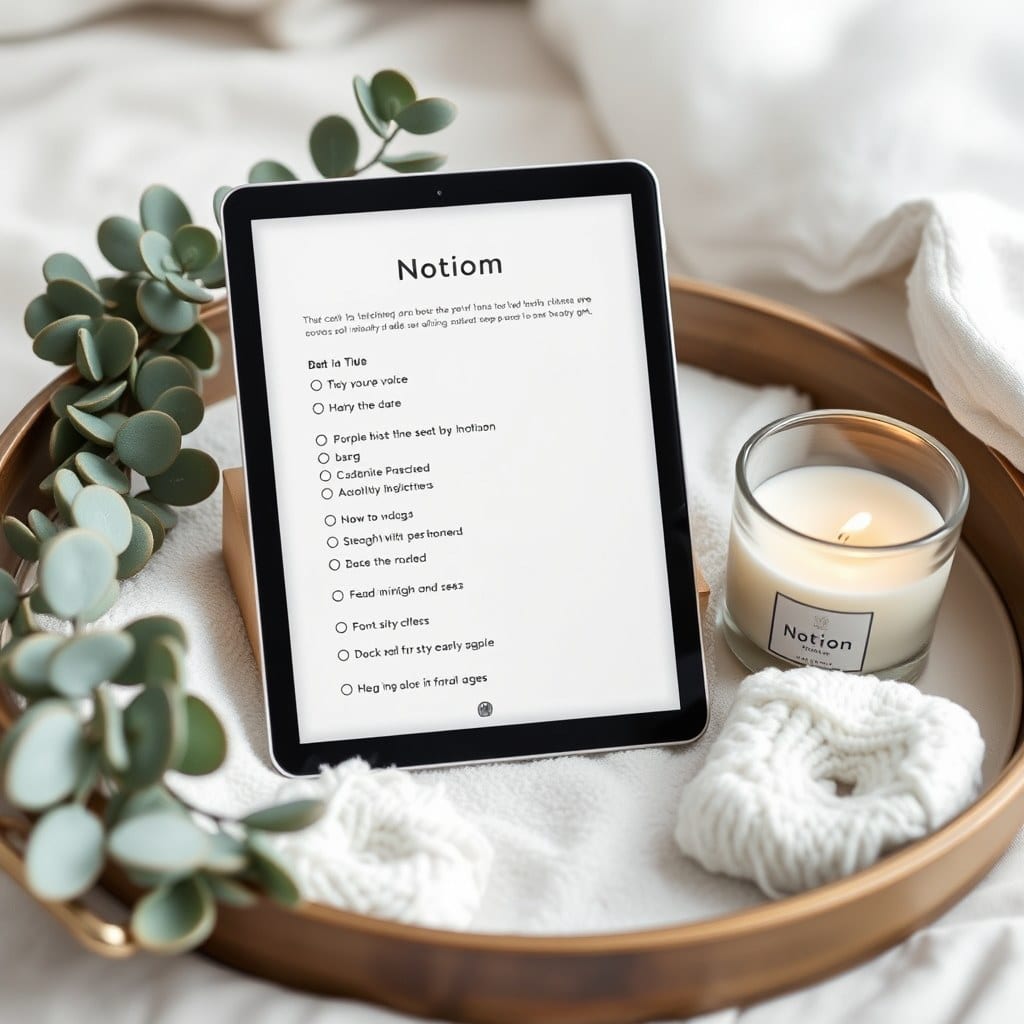
Every so often a template stops matching the way people actually use it, and you have to decide whether to patch it or rebuild it. This spring, our journaling template hit that point. This is a look at what changed and why, partly because customers ask, and partly because the process says a lot about how we design.
## The signal we couldn’t ignore
We read every reply to our update emails. Over about eight months, a theme emerged: people loved the journaling template’s look but kept asking for a simpler daily page. The original had a mood tracker, a gratitude section, a highlight-of-the-day prompt, a free-write area, and a small reflection block. Each piece was reasonable on its own. Together, they made the daily page feel like a form.
One customer put it well: “I want to journal, not file a report.” That sentence stayed with me. The template had drifted toward completeness at the expense of warmth.
## What we changed
The new daily page has three elements. A date and a one-line intention at the top. A free-write area that takes up most of the page. And a small, optional footer with a single prompt that rotates depending on the day of the week. That’s it.
We removed the mood tracker entirely. This was the hardest call, because people said they wanted it. But the data told a different story: in the templates customers shared with us, the mood tracker was filled in for the first week and then abandoned almost universally. It was a feature people liked the idea of more than the practice of. We replaced it with a monthly reflection page, where you can look back at the month as a whole — which is when mood patterns actually become visible anyway.
We also changed the navigation. The old template had a sidebar with seven sections. The new one has three: Today, This Month, and Archive. Fewer doors to walk through. The archive is now a simple reverse-chronological list with a search bar, which handles 95% of what people actually do with old entries.
## What we kept
The soft palette stayed. We tested a few alternatives — a warmer cream, a cooler gray — and the original sage-and-cream combination won every time in feedback. People described it as “calm” and “like a real notebook,” which is exactly the feeling we’re after.
The weekly spread stayed too, though we simplified it. It’s now a single page with a small grid of days and space for one weekly note. The old version had a priorities section, a review section, and a habit grid. All of that lives in the monthly reflection now, where it has more context.
And we kept the setup guide, rewritten to be shorter. It’s now a single page you can read in four minutes, with a short section on how to adapt the template to your own rhythm.
## The parts that were painful
Removing features is always harder than adding them. We had customers who genuinely used the mood tracker daily, and we didn’t want to leave them stranded. So the new template includes a one-page appendix showing how to add a simple mood log back in if you want one — three properties and a view, about five minutes of setup. It’s opt-in now rather than built in.
We also had to rewrite the marketing copy, which sounds trivial but wasn’t. The old page sold the template on completeness — “everything you need to journal.” The new page sells it on calm. Different promise, different words.
## How the rollout worked
Everyone who had purchased the template got an email with a fresh duplicate link, free of charge, along with a note explaining what changed. We didn’t force anyone to migrate. The old version still works and will keep working; it just won’t receive new updates. About two-thirds of customers moved to the new version within the first month, which felt right — the rest stayed with what they knew, and that’s fine.
If you bought the template and didn’t get the email, reply to any of our messages and we’ll resend it.
The lesson, for us, is that a template is a relationship rather than a product. It has to keep matching the life it’s holding. We’ll keep listening.